Units for old houses
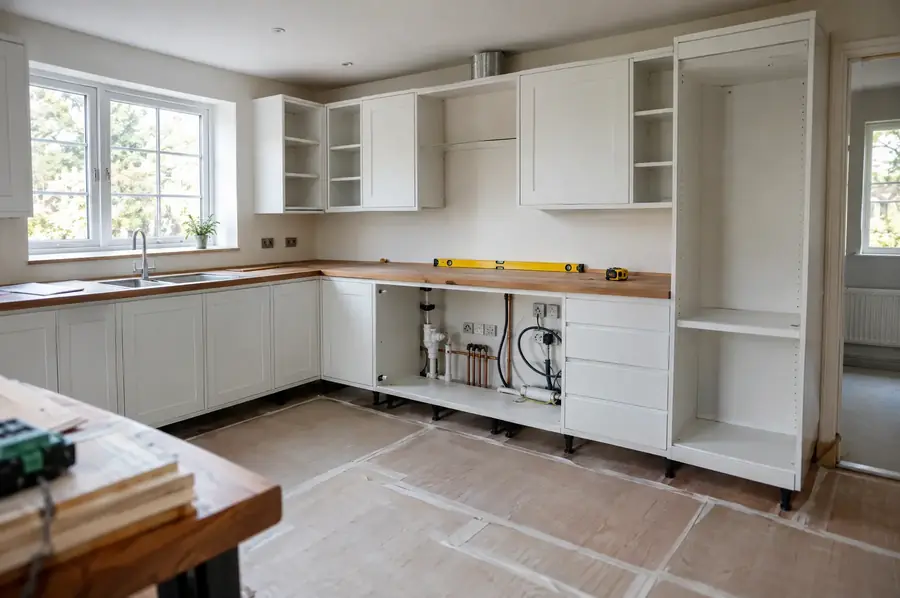
We measure uneven walls and ceilings and adjust the units in the factory so there are no gaps.
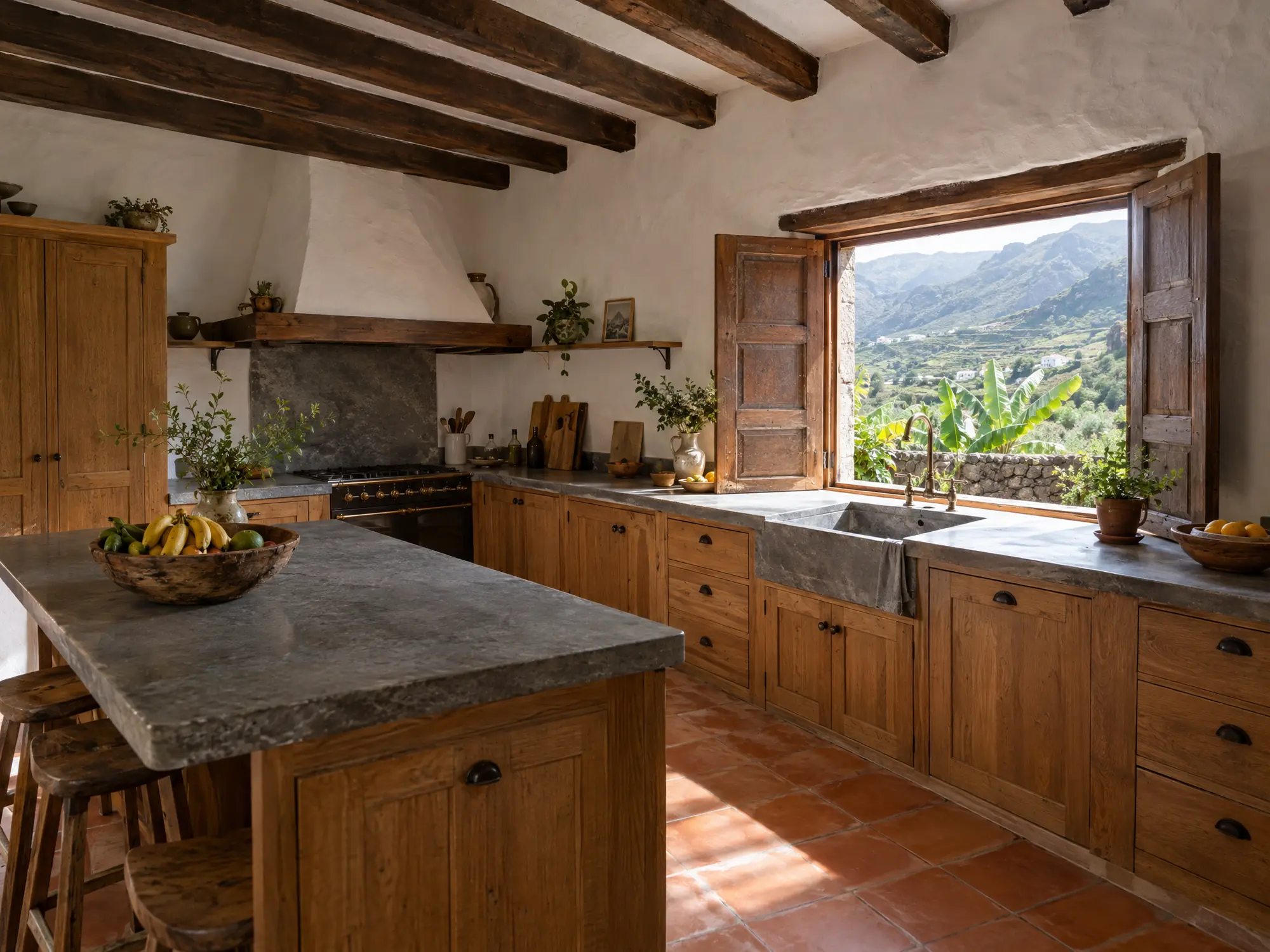
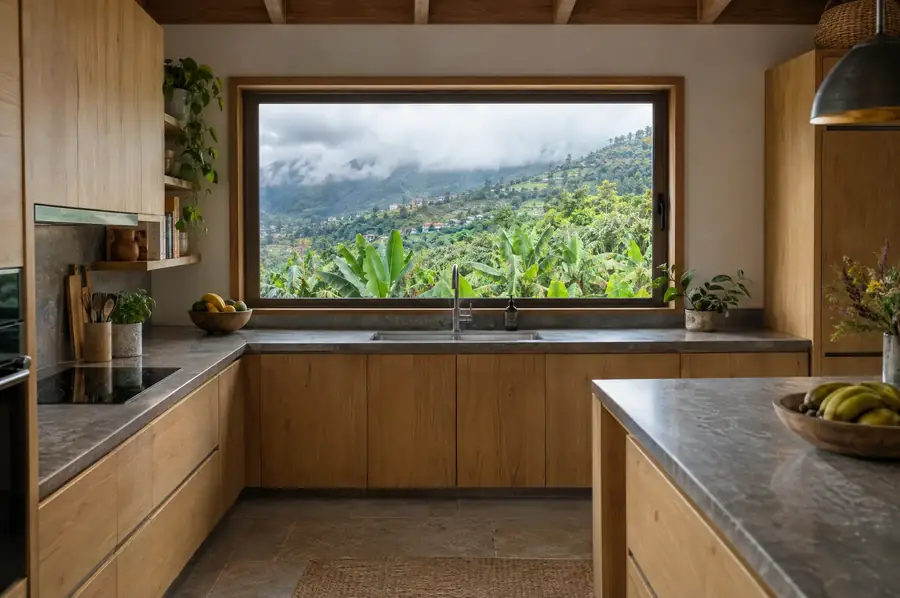
A rustic kitchen uses natural materials on show (solid wood, stone, terracotta) and respects the architecture of the house. In Tenerife it suits traditional houses in the north above all, where what matters is building the units for the humidity and fitting them to walls and beams that are not straight.
We measure uneven walls and ceilings and adjust the units in the factory so there are no gaps.
We choose the species, construction and finish with the climate of the north of the island in mind.
We design around what gives the house its value instead of covering it up.
Soft-close drawers, integrated appliances and proper extraction within a traditional look.
Rustic kitchens in Tenerife are at home in the traditional houses of the north: La Orotava, Icod, Tacoronte, El Sauzal or the old quarters of La Laguna, with thick walls, timber ceilings and terracotta floors. Renovating the kitchen in a house like this means respecting what already has value and building units that live happily with walls that are out of plumb and with more humidity than on the south coast.
Traditional rustic uses solid wood with framed doors, iron or brass handles and natural stone worktops. Modern rustic keeps the natural materials but simplifies the shapes: flat wooden doors with a strong grain, matt stone-look worktops and less ornament.
In old houses, something in between usually works best. The walls, beams and floor already bring all the character, so simple timber units let the house take centre stage and stop the kitchen feeling overdone.
Solid wood works in northern kitchens as long as it is chosen and built with the humidity in mind. Wood moves as humidity changes, and a large door made from a single solid piece can split or warp. That is why large doors are made as frame-and-panel doors, which absorb the movement, or from laminated core board veneered in natural wood, which is more stable.
The finish matters as much as the species. A good-quality oil or water-based varnish protects the wood and can be renewed. Around the sink and dishwasher, water is the main enemy: there the wood needs to be very well sealed and the worktop needs a proper drip groove. Humidity also shapes other decisions in kitchens in the north of Tenerife, such as the board used for the carcasses and the hardware.
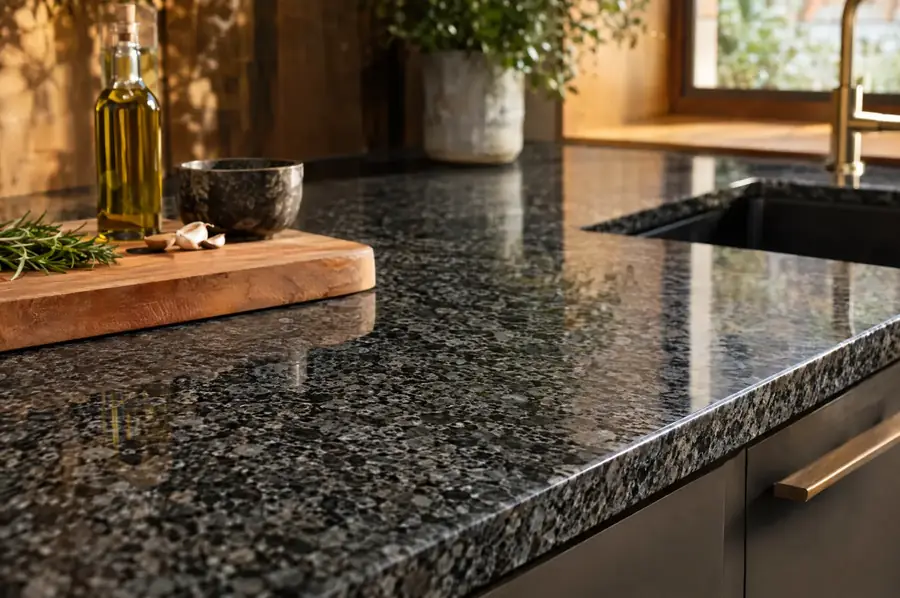
Natural stone is the classic worktop for a rustic kitchen, and granite is the toughest option: it takes heat, knocks and daily use with little maintenance if it is properly sealed. Solid wood makes a very warm worktop, although it needs oiling and you must avoid leaving water standing on it.
The terracotta floors in old houses are porous and soak up grease and stains. If you keep them in the kitchen, they should be deep-cleaned and treated with a sealer before the units go in, so the plinths do not leave marks and the working area does not stain.
Keeping the beams and walls is what makes a rustic kitchen authentic, but it shapes the design. Before designing, it is worth checking the condition of the timber: termites are present in some parts of the north of Tenerife, and they need to be ruled out or treated before the renovation is closed up.
With stone walls there are two things to consider:
Exposed beams limit the height of the wall units and where the extractor can go. In many cases it is better to leave out wall units on the stone wall and keep it on show, making up the storage with tall units or a larder.
If the kitchen is part of a wider renovation of the house, we coordinate it within the kitchen renovation project, so units, services and building work all follow the same plan.
Open the planner with this starting point already chosen. Then change the measurements, units and finishes, and see the drawing and an estimated price including IGIC straight away.
Yes, with a modern rustic style: wooden doors with a strong grain, a stone or stone-effect worktop and a handcrafted touch, such as a ceramic sink or solid wood shelves. What makes no sense is faking beams or stone walls where there are none.
The usual approach is to hide the motor inside a built-in chimney breast, a timber-clad hood or a wall unit, using an extractor insert. You get the extraction of a modern hood while what you see suits the house. If there are beams, check first where the duct can run without cutting through them.
They can often be kept as a decorative feature or as a serving area. To use them again, the flue and chimney need checking, and they must be well separated from the new units because of the heat.
In protected historic centres, such as La Laguna's, works can come with extra conditions even when they are internal. Before touching walls, beams or openings, check with the town hall (ayuntamiento).
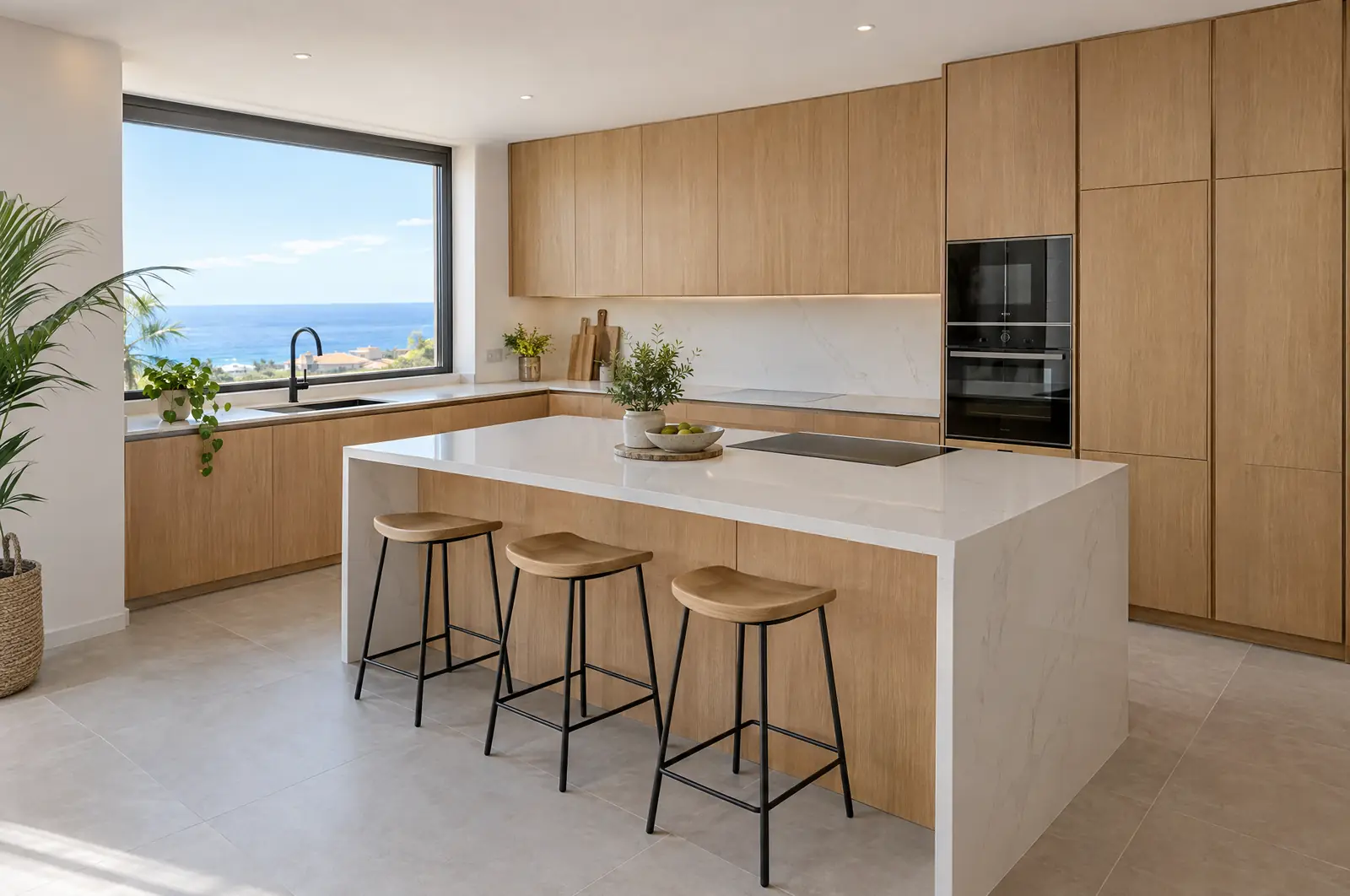
See how it would look and what it would cost in the kitchen planner, or ask us to visit and measure your home.
We will reply with a proposed visit and a first price range. If you prefer to talk, message us on WhatsApp.
Your privacy
We use technical cookies so the website works and, only if you accept them, Google Analytics cookies to understand how it is used and improve it. We do not use advertising cookies. Cookie policy