Materials for sun and salt air
Doors that do not yellow in the light, hardware that resists corrosion and worktops that cope with changes in temperature beside large windows.
In the south of Tenerife a kitchen has to withstand direct sun, salt air and, in many homes, the pace of holiday lets. We design, build and fit kitchens there, choosing materials and hardware for those conditions from the start, which is what avoids replacing parts after a few years.
Doors that do not yellow in the light, hardware that resists corrosion and worktops that cope with changes in temperature beside large windows.
Surfaces that are easy to clean between stays and parts that can be replaced without changing the whole kitchen.
Layouts that connect the kitchen with the living room and the outdoors, which is how people live in the south for much of the year.
If you do not live on the island, the work can be followed remotely with a 3D proposal, decisions in writing and photos of each stage.
Kitchens in south Tenerife are shaped by the light and the sea. In Adeje, Arona, Los Cristianos, Granadilla and San Miguel, many get direct sun for much of the day, are a short distance from the sea and often belong to homes that are let out or whose owners spend periods away. All of that changes which materials to choose and how to organise the work.
The first decision is to choose doors, hardware and worktops that will not deteriorate in the light and the sea air. Strong sun coming through large windows and terrace doors fades some low-end laminates and can yellow poor-quality white lacquers. That is why we recommend finishes with good stability against ultraviolet light, especially on the units facing the window.
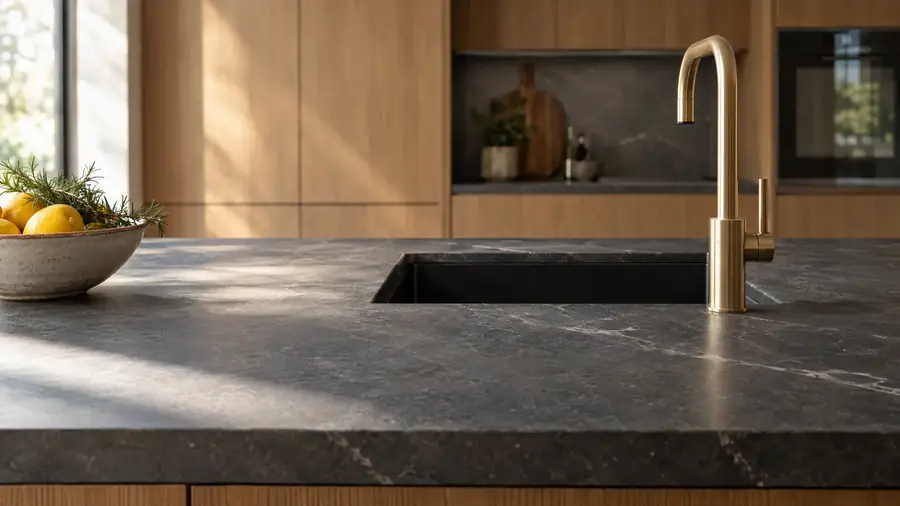
Salt air attacks anything metal. Hinges, drawer runners, handles and legs need to be made of materials treated against corrosion, because in seafront homes ordinary parts end up rusty within a few seasons. For the worktop, porcelain and ultra-compact surfaces cope well with the sun and with changes in temperature when the kitchen opens onto the terrace.
A rental kitchen needs to withstand heavy use by people who do not look after it as their own. That calls for plain doors that are easy to clean, worktops that do not stain easily, well-sealed edges and drawers with sturdy runners.
It is also worth thinking about replacements. If a door or a handle breaks between two bookings, it is easier to replace when the kitchen uses finishes and sizes that can be ordered again. In small apartments, the kitchen is usually fitted out with integrated appliances and a straight or L-shaped layout that leaves room for a table.
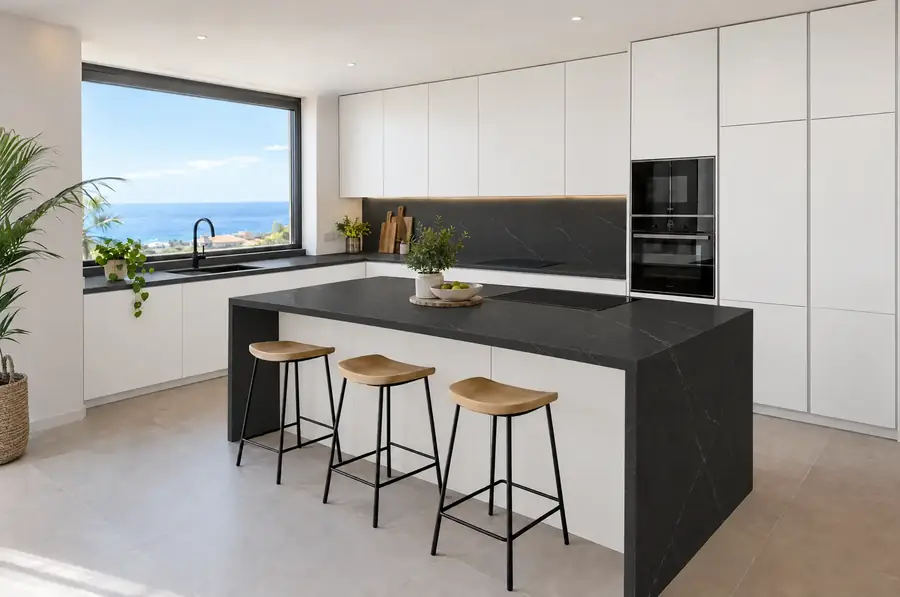
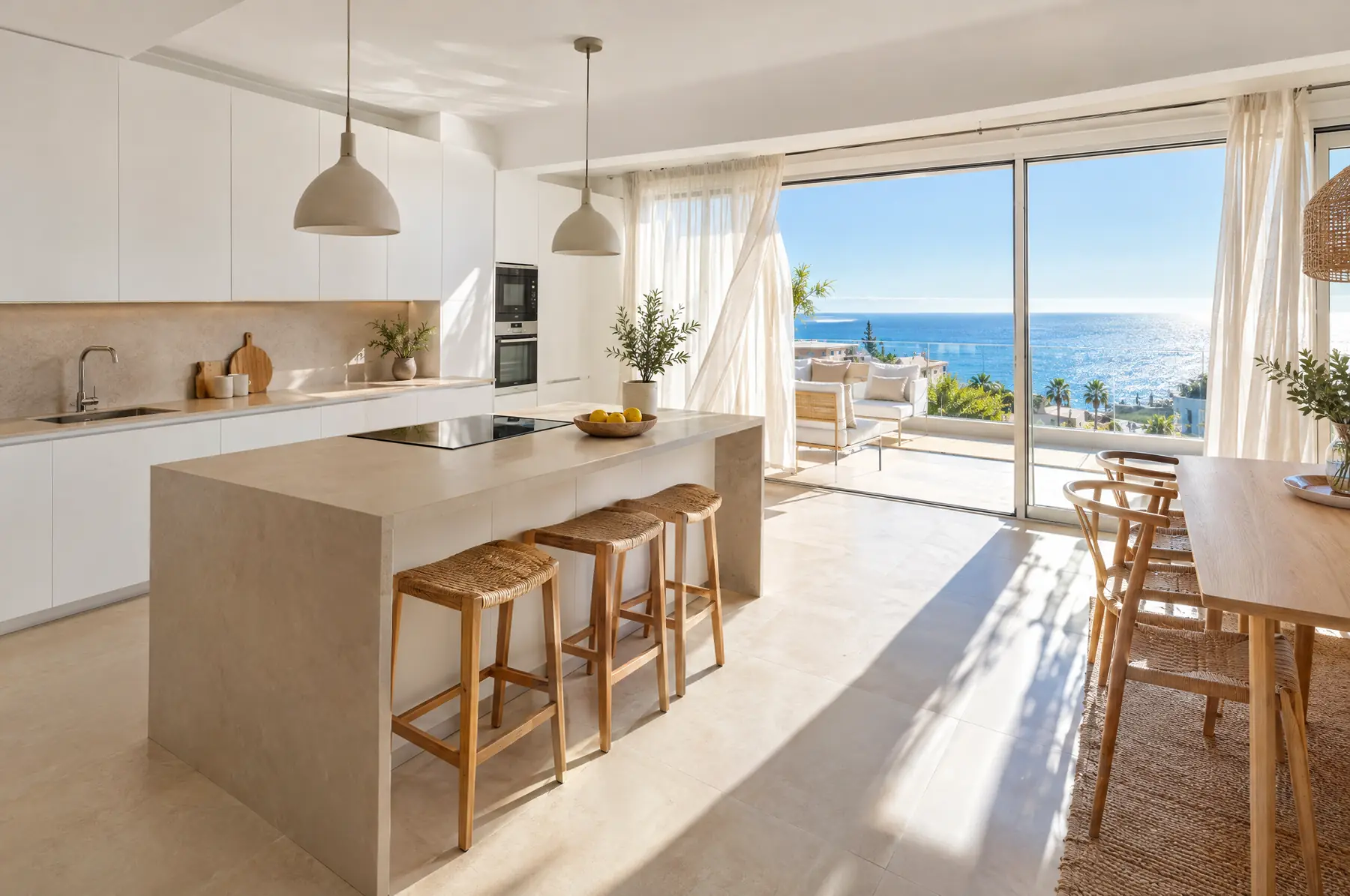
In the south, life is lived largely outdoors, and a kitchen open to the living room with access to the terrace is a very common layout in new and renovated homes. It works when the cooking area is away from the draught coming through the door, the cooker hood has enough power for an open space and the worktop carries on into a breakfast bar or peninsula that acts as a transition.
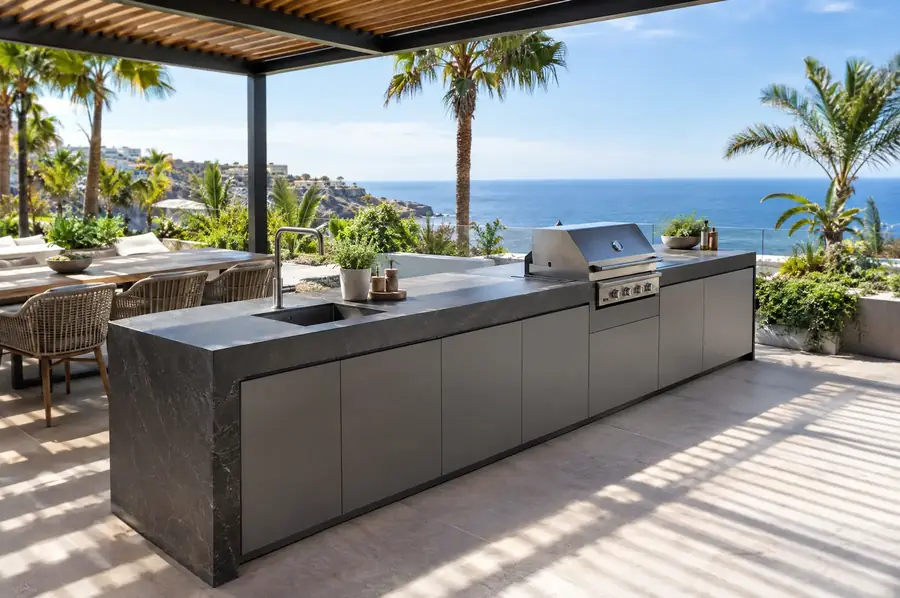
If you have a large terrace, some owners complement the indoor kitchen with an outdoor kitchen for the barbecue and meals outside. For the indoor layout, look at the key points of open-plan kitchens.
If you live in mainland Spain or in another country and cannot be at the works, the process can be organised so that you decide remotely: a 3D proposal, a written quote, a choice of finishes from photographed samples and progress photos at each stage.
What we do need is a contact person for access to the property and, if it is in a building, to know the community’s rules on working hours, use of the lift and removal of rubble. With that sorted, you can start with the design of your kitchen and estimate the cost with the price calculator.
Open the planner with this starting point already chosen. Then change the measurements, units and finishes, and see the drawing and an estimated price including IGIC straight away.
Yes. With a floor plan, photos of each wall and approximate measurements we can put together a first proposal and a guide price. The final quote is agreed once we have measured the property.
If the kitchen is very worn, yes, because it is one of the first things people see in the listing photos and in the reviews. Doing the work before the season also avoids losing bookings while it is under way.
It does not damage them, but the calima (the Saharan dust haze) leaves a fine dust that gets into drawer runners and hinges and can scratch gloss finishes if wiped dry. After an episode of calima it is best to use a damp cloth, without rubbing lacquered or polished surfaces dry. Matt and textured finishes hide it better.
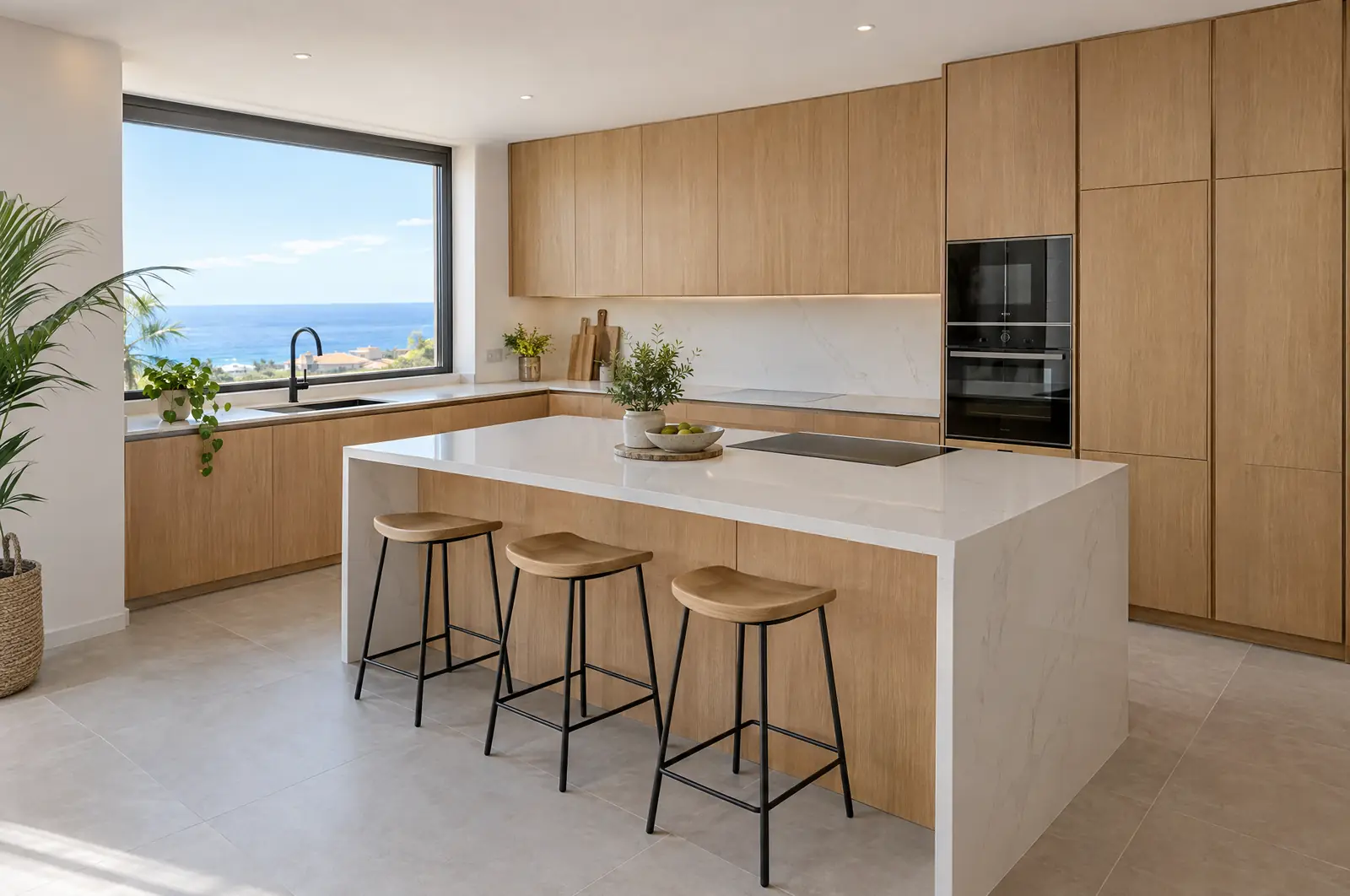
See how it would look and what it would cost in the kitchen planner, or ask us to visit and measure your home.
We will reply with a proposed visit and a first price range. If you prefer to talk, message us on WhatsApp.
Your privacy
We use technical cookies so the website works and, only if you accept them, Google Analytics cookies to understand how it is used and improve it. We do not use advertising cookies. Cookie policy