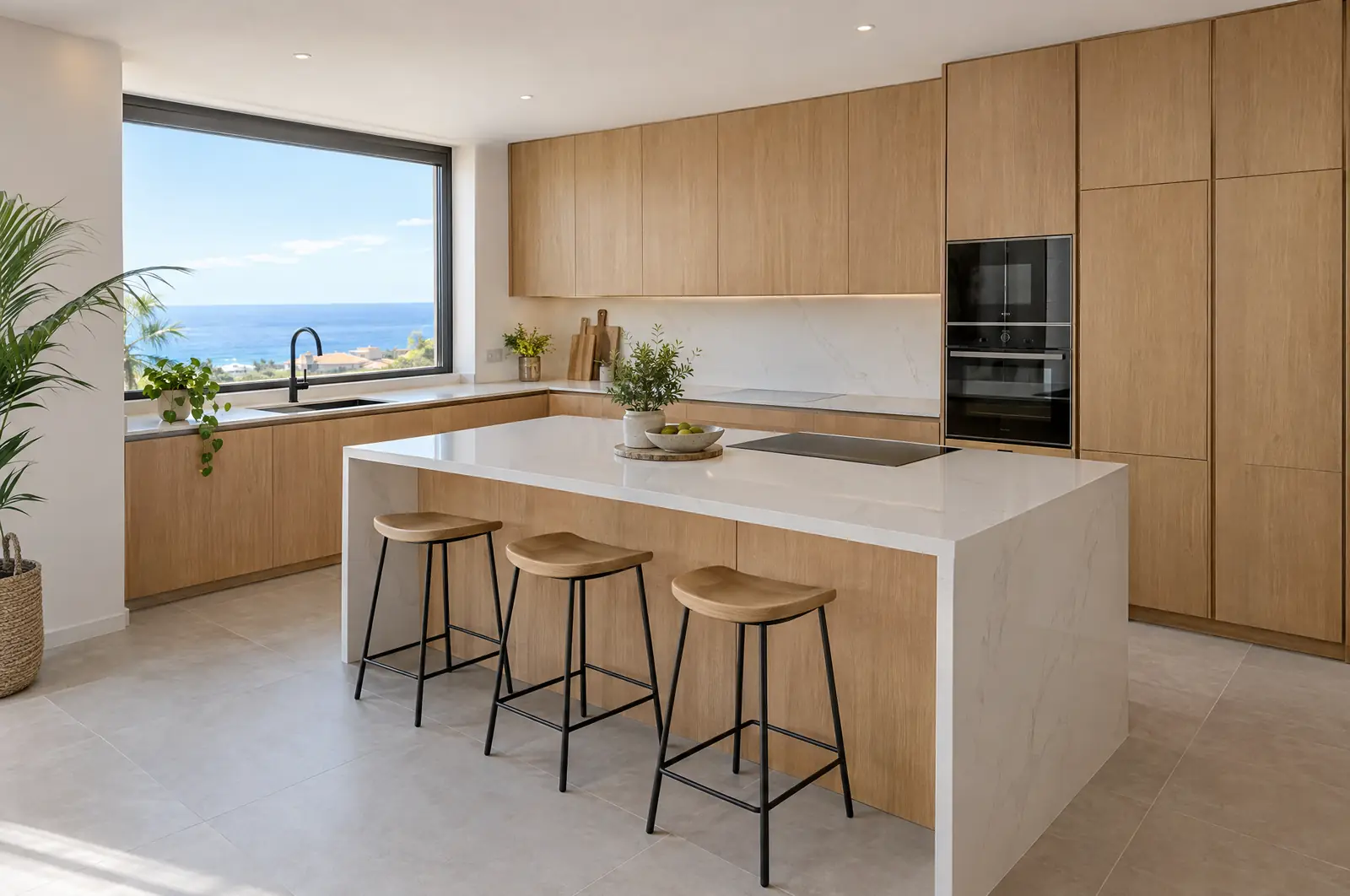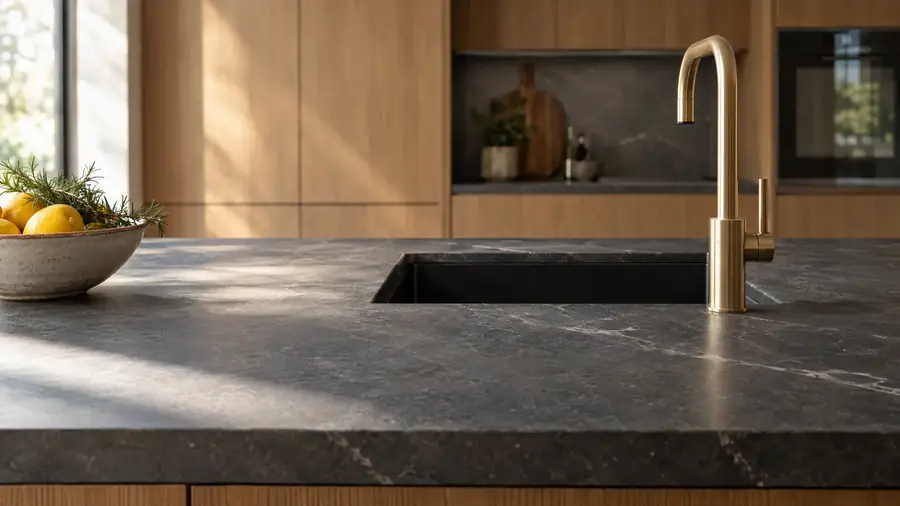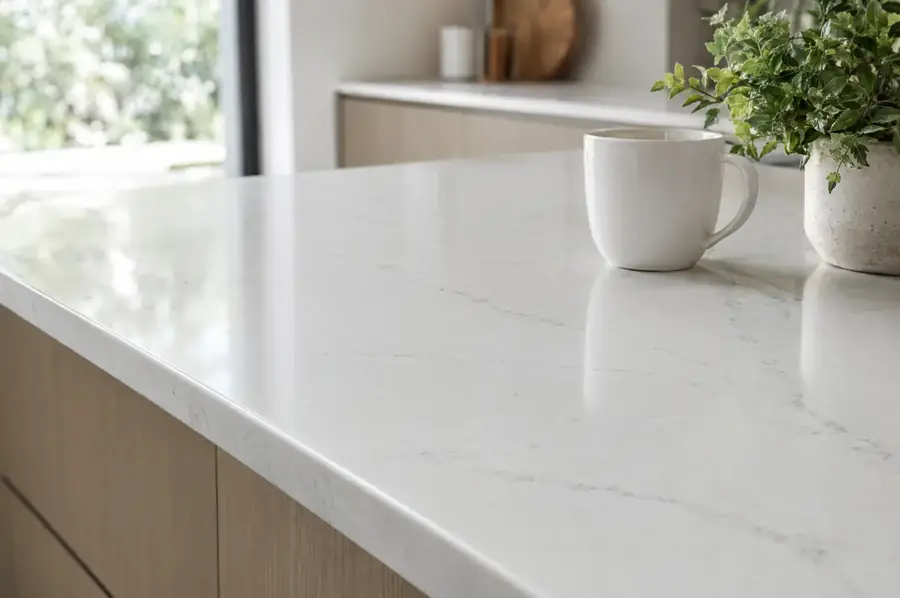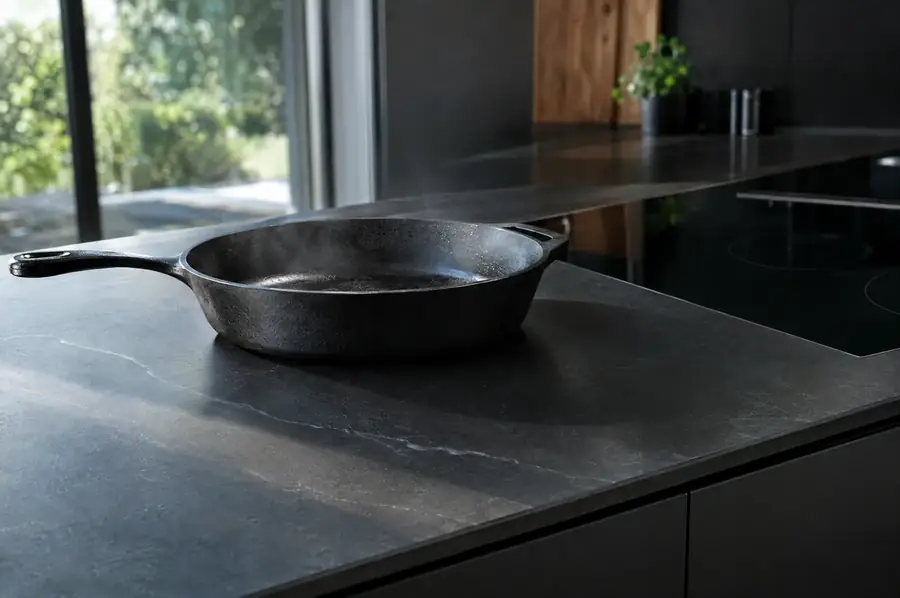
Silestone, Dekton, granite and porcelain are the four materials most often requested for kitchen worktops in Tenerife, and none of them is best at everything. Each one has a specific weak point, and choosing well means making sure that weak point does not clash with the way you cook or with where the worktop goes.
What each material is
Silestone and Dekton are trade names of Cosentino, while granite and porcelain are names of materials, so the real comparison is between engineered quartz, sintered stone, natural stone and ceramic.
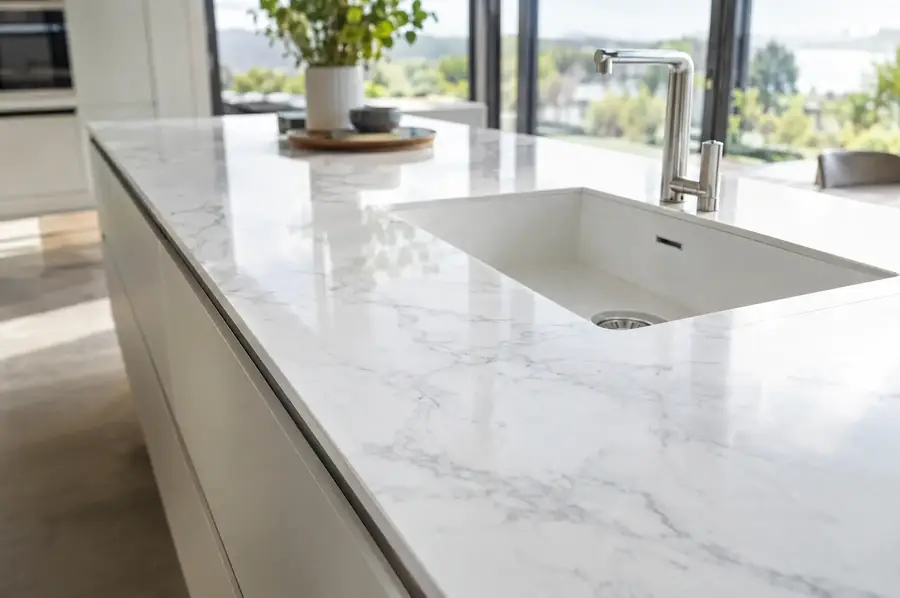
- Silestone is Cosentino’s engineered quartz brand. Engineered quartz is a mix of crushed minerals (traditionally quartz) bound with resins and pressed into slabs; in its recent series Cosentino presents it as a hybrid surface with minerals and recycled materials, but it still uses resin as a binder. Other brands make the same material with similar performance.
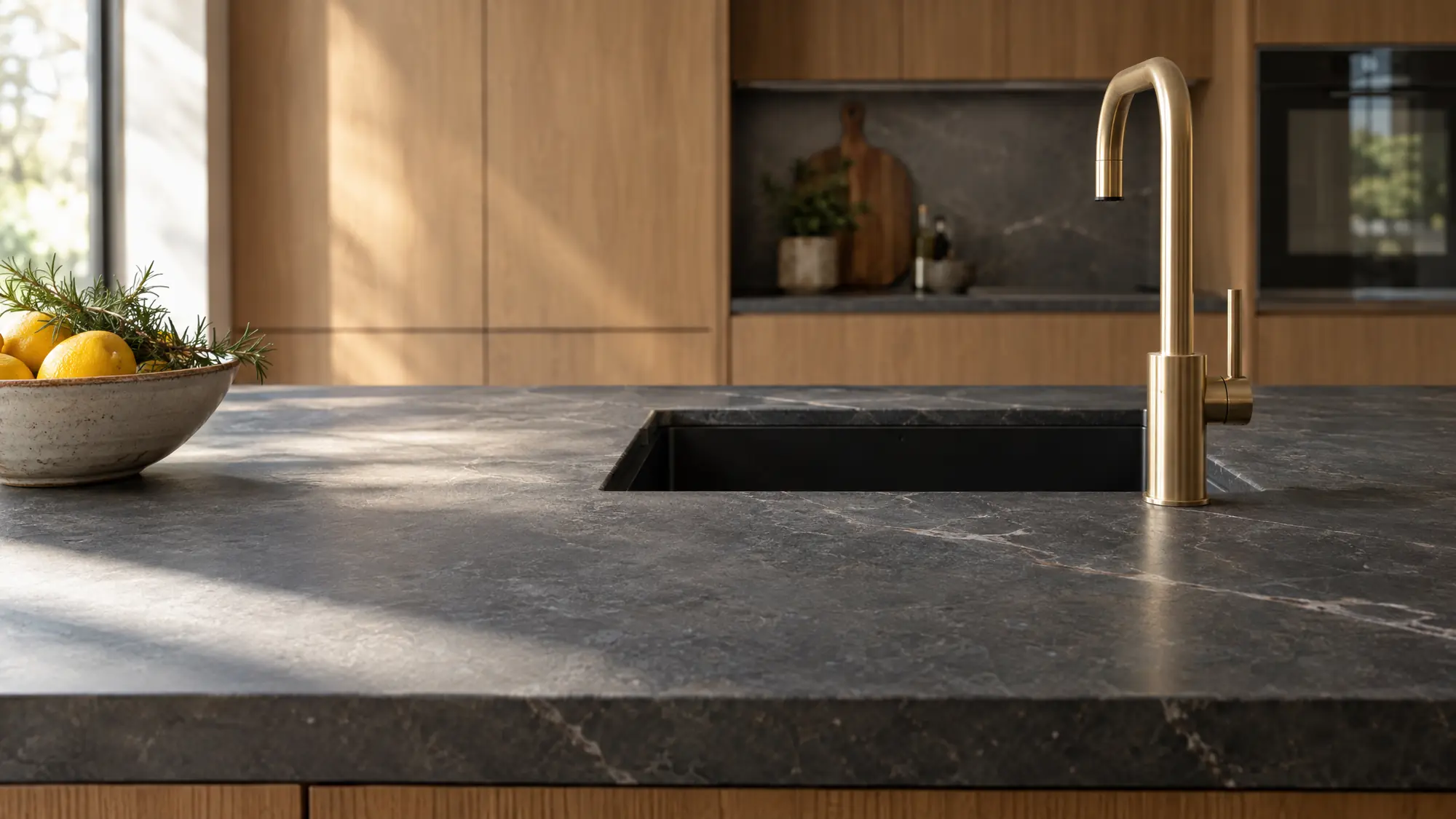
- Dekton is Cosentino’s ultra-compact surface brand, also known as sintered stone. It is made from minerals subjected to very high pressure and temperature, without resins.
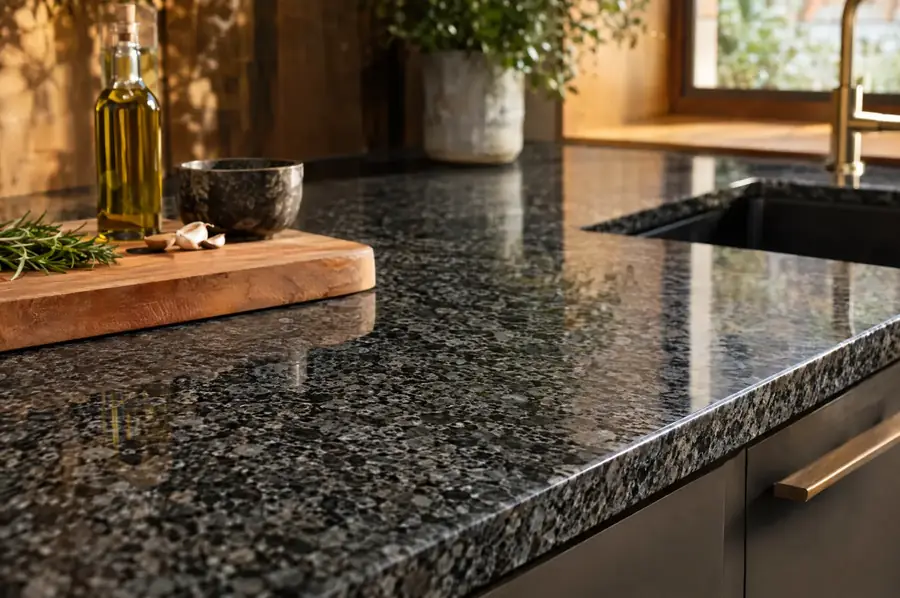
- Granite is natural stone cut from a quarry. Every slab is different and porosity varies with the variety.
- Porcelain is a large-format ceramic sheet, from the same family as porcelain floor tiles, made in thin thicknesses.
The four worktops compared
The main differences lie in heat, sunlight and knocks on the edges. This table sums up how each material usually behaves in domestic use. It is a qualitative assessment based on the manufacturers’ usage recommendations and the known properties of each material, not on our own tests; all four are part of our worktop range, so we compare them using the same criteria for each:
| Quartz (Silestone) | Sintered stone (Dekton) | Granite | Porcelain | |
|---|---|---|---|---|
| Direct heat | Weak: the resin does not tolerate very hot pans | Very good | Very good | Very good |
| Stains | Very good | Very good | Good if sealed; depends on the stone | Very good |
| Scratching | Good | Very good | Very good | Very good |
| Knocks on edges | Good | Weak: can chip | Good | Weak: can chip |
| Sun and UV rays | Weak: can yellow or lose colour | Very good | Good | Very good |
| Outdoors | Not recommended | Suitable | Suitable | Suitable |
| Maintenance | Minimal | Minimal | Periodic resealing | Minimal |
| Appearance | Even colours and imitation veining | Wide variety, matt finishes and stone effects | Natural, every slab unique | Very convincing marble and stone effects |
Within each material there are differences between manufacturers and colours, so before you place the order ask for the technical data sheet of the specific product: it states the heat resistance, whether it can be used outdoors and the care the warranty requires.
Which copes best with the coast and salty air
In a home near the sea, any of the four copes well with salty air if the worktop is indoors. Salt mainly attacks metals: hinges, runners, taps and low-grade steel sinks are what deteriorate first on the seafront, not the stone.
Where there are differences is in the sun. In the south of Tenerife, a worktop next to a south-facing picture window gets many hours of direct light. Engineered quartz contains resins that can yellow or lose colour intensity under ultraviolet radiation, especially in light shades. For those positions, sintered stone or porcelain are safer. Granite also holds up, although very dark polished shades can lose some shine over the years if they get sun and salt air at the same time.
Which to use in an outdoor kitchen
For a terrace, a barbecue or a pool area, the choice comes down to sintered stone, porcelain or granite. Engineered quartz is ruled out because of UV rays, and the manufacturers themselves do not guarantee it outdoors.
Sintered stone is the most complete option outside: it is unaffected by sun, rain or the heat of a griddle. Porcelain behaves in a similar way and usually offers very similar finishes. Granite works well, but needs sealing more often when exposed. In any case, in an outdoor kitchen what fails most is not the worktop but the units and hardware if they are not designed for the weather.
The weak points of each one
Quartz does not handle direct heat well: a pan straight off the hob can leave a mark or cause a crack through thermal shock. With trivets it is not a problem, but if you tend to put pans down on the worktop, it is not the material for you. In return, it is very stain-resistant and easy to maintain; there is more detail on the page about Silestone quartz worktops.
Sintered stone and porcelain are very hard on the surface but more brittle at the edges. A sharp knock from a cast-iron pan on the arris can chip a corner, and the repair does not end up invisible. That is why slightly rounded or bevelled edges are recommended. In some porcelains the pattern is only on the surface and the edge shows a different colour; ask whether the slab has through-body veining. You can read more about the Dekton sintered stone worktop on its page.
Granite is the most forgiving of rough use, but it is porous. A properly applied sealer stops oil or wine from soaking in; if it is neglected, dark stains appear that are hard to remove. Dark granites usually absorb less than light ones. The page on granite worktops lists the most common varieties.
Undermount sinks: which materials allow them
All four allow an undermount sink, which is fixed underneath and leaves the cut-out with its polished edge on show. It is the cleanest option, because you can sweep crumbs straight into the bowl with no rim in the way.
There are nuances. In thin 12 mm porcelain the edge of the cut-out is very slender and should be polished by an experienced workshop so that it is not left fragile. In granite and quartz it is the most common installation. Drainer grooves cut into the worktop itself can be done without problems in quartz, granite and sintered stone; in porcelain it depends on the slab having the colour right through its body, because if the pattern is only on the surface, the groove exposes a body of a different colour.
How price comes into it
Price depends more on the colour, the thickness and the complexity of the cutting than on the material itself. A simple Spanish granite and an entry-level quartz can be similarly priced, while a special colour in any of the four costs much more. In general, sintered stone and large-format porcelain sit at the top end.
The cutting also counts: hob and sink cut-outs, grooves, upstands, special edges and joints. An L-shaped kitchen with an island involves several pieces and more labour than a straight worktop. To compare with your measurements, the useful thing is to ask for a price per linear metre with the cutting included and to check whether it includes IGIC (the Canary Islands sales tax, 7 %).
Which worktop to choose for the way you cook
If you cook a lot and put hot pans down on the worktop, go for sintered stone, porcelain or granite. If you want an even colour, minimal maintenance and the worktop is indoors and away from direct sun, quartz is a very balanced option. If you want a natural look and do not mind resealing now and then, granite. And if the worktop goes outside, sintered stone or porcelain.